The Return of Jack Broussard
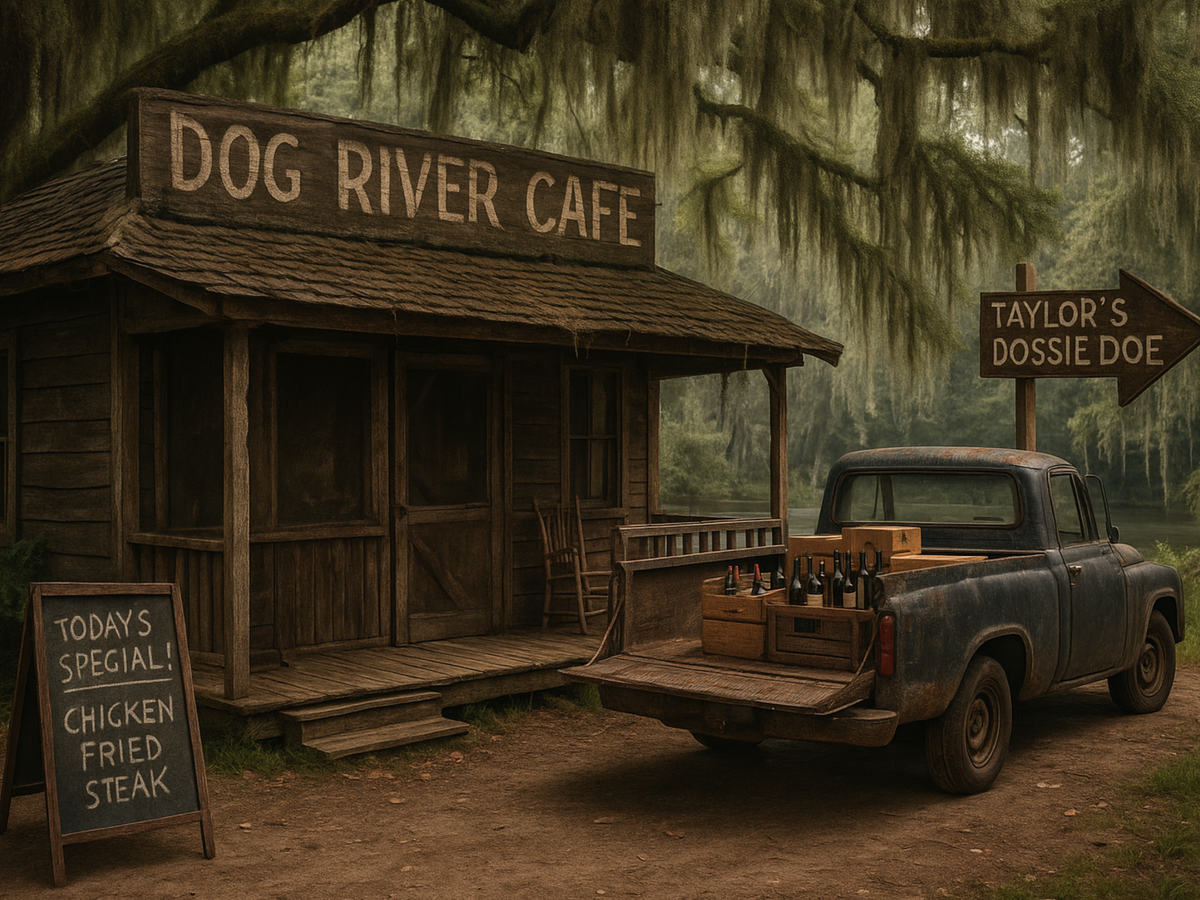
From the Archivist of Belle Perdue, sometime after supper, sometime before the storm rolled in.
Nobody saw the boat at first.
It slipped down the bayou like it knew the way better than the man rowing it. The fog had thickened just past Widow Dupree’s fishing line, and the cypress trees grew so dense it felt like the sun had up and quit trying to get through. But the man kept rowing, steady, like he was answering a call he hadn’t heard in years but never forgot.
By the time he landed at the warped dock behind Taylor’s Dossie Doe, the Saturday night fais-do-do was just getting started. The screen door flapped once, twice, then stuck like it always did, and in stepped a man nobody could name, but everyone somehow knew.
His boots hit the floorboards soft as a whisper. He carried a long case like a guitar, but thinner, stranger, shaped like it was meant for an instrument that hadn’t quite been invented yet. He tipped his hat to the bar, the band, and the few folks closest to the door.
"Is Miss Lettie still kicking around here?” he asked, like he expected the answer to be no.
Heads turned.
Reggie nearly dropped his haunted Bluetooth speaker, it let out a soft moan, which only added to the effect.
Miss Lettie was there, as always, angled just right on the ramp, “accidentally on purpose” blocking the Fontenots’ delivery of this week’s wine and whiskey. She blinked once and said, “Now there’s a face from the corner of a memory. Don’t tell me...”
“Jack,” he said. “Jaques Broussard.”
The room rippled. Even the ice in folks’ glasses seemed to pause. Someone whispered, “That boy’s family died years ago...”
“And the house?” he asked gently, not looking at anyone.
“Still standing,” came the answer, from Old Rosie near the back. “Leaning a bit. But then again, so am I.”
Jack smiled like the weight of the world had just shifted to one shoulder. “Good enough,” he said. “She’s got good bones.”
Lettie rolled forward with surprising speed. “You’re staying with me tonight. Tomorrow we’ll walk you home. I’ve got a pot of red beans that won’t mind the company.”
He nodded. “That’ll do.”
Someone in the crowd broke into a chuckle. “Well I’ll be damned. Jaques Broussard. The same kid used to shoot BBs at my weather vane.”
“And dragged a stick across my fence till the whole thing leaned left,” added another.
“And drew on my neck in fourth grade,” said Marlene, standing up with her arms crossed, but her eyes misty.
“I remember all of you,” Jack said. “I was a wild little thing. Thought if I made enough noise, somebody’d see me.”
He looked around the room, then tapped the case he’d carried in.
“Well. I finally got seen. Didn’t care for it much. Figured it was time to come back where people already knew who I was, flaws and all.”
Then he opened the case. Inside wasn’t a guitar. It wasn’t anything anyone could name. Strings, yes. But stretched over something carved and strange, shaped like the skeleton of a pelican married a harp and got baptized by moonlight. He strummed it once and the room went still again. Even the ceiling fan took a pause.
Thunder cracked then, like the sky was clearing its throat. Folks jumped, laughed, clinked glasses.
Jack just said, “Y’all better get used to that.”
And he played.
Explore more: Belle Perdue